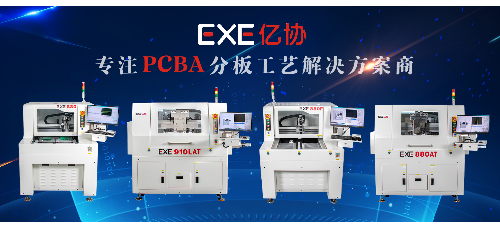
A Complete Analysis of PCB Router Machine Types: Differences and Suitable Scenarios of Mechanical, Laser and Punching Models
In the PCB manufacturing process, depaneling is a critical post-processing step that directly affects the yield and reliability of circuit board products. PCB router machines, as the core equipment for depaneling, are divided into three mainstream types—mechanical, laser, and punching models—each with distinct structural characteristics, technical advantages, and application scopes. Selecting the right equipment type according to production needs is the key to balancing processing efficiency, precision, and cost.
1. Mechanical PCB Router Machine: The Traditional and Versatile Option
Core Working Principle
Mechanical PCB routers rely on high-speed rotating cutting tools such as end mills and PCB cutters to separate the PCB panel along the preset routing path. Most models are equipped with CCD visual positioning systems and vacuum adsorption platforms to ensure cutting accuracy and stability during processing.
Key Advantages
Strong versatility: Adaptable to various PCB materials, including FR-4, aluminum-based boards, copper-clad laminates, and flexible PCBs (FPC).
Low initial investment: The equipment price and daily maintenance cost are relatively low, making it suitable for small and medium-sized production workshops with limited budgets.
No thermal damage: The physical cutting method will not produce thermal effects, avoiding problems such as edge carbonization and material deformation that may affect board performance.
Limitations
Tool wear problem: Cutting tools need regular replacement, especially when processing high-hardness materials, which will increase the long-term operating cost and cause frequent downtime for tool changes.
Lower efficiency: Single-pass cutting mode has a slower processing speed compared with laser and punching types, which is not ideal for large-batch mass production scenarios.
Suitable Scenarios
Mechanical PCB routers are ideal for small-batch multi-variety PCB production, such as customized circuit board processing for special equipment. They are also the preferred choice for processing rigid-flex PCBs and boards with high requirements for edge quality, as well as for laboratories or small workshops with tight budget constraints.
2. Laser PCB Router Machine: The High-Precision Choice for Fine Processing
Core Working Principle
Laser PCB routers use focused laser beams, commonly CO₂ lasers or UV lasers, to ablate and cut PCB materials. The non-contact processing method is controlled by computer programming to achieve high-precision path cutting, with no physical contact between the equipment and the board surface.
Key Advantages
Ultra-high precision: The cutting accuracy can reach ±0.01mm, which is suitable for depaneling of high-density interconnect (HDI) boards and micro-PCB components widely used in 5G and automotive electronics fields.
No tool wear: Non-contact processing eliminates the need for tool replacement, reducing maintenance costs and downtime caused by tool changes, and ensuring continuous production efficiency.
High processing efficiency: The laser cutting speed is 2–3 times faster than that of mechanical routers, and it can realize continuous batch processing, which significantly improves the overall production capacity of the workshop.
Limitations
Thermal damage risk: High-power laser cutting may cause slight carbonization of the PCB edge, which needs to be matched with a professional cooling system for optimization to avoid affecting the subsequent soldering process.
High equipment cost: The price of laser routers is 3–5 times that of mechanical models, which is not cost-effective for small-scale production or workshops with low-precision processing requirements.
Suitable Scenarios
Laser PCB routers are widely used in the mass production of high-precision HDI boards, 5G communication PCBs, and automotive electronic control boards, where precision and efficiency are critical. They are also the best option for processing fragile and thin PCB materials that are not suitable for physical cutting, as well as for high-end manufacturing workshops with strict requirements for processing accuracy and product consistency.
3. Punching PCB Router Machine: The Efficient Solution for Mass Production
Core Working Principle
Punching PCB routers use customized metal molds to punch and separate PCB panels at one time. The mold is designed according to the exact shape and size of the target PCB, and the processing is completed by the stamping force of the equipment, which can separate the entire panel into individual boards in a single operation.
Key Advantages
Extremely high efficiency: A single stamping can complete the depaneling of the entire PCB panel, with a processing cycle of only a few seconds, making it the best choice for large-batch mass production scenarios that pursue high throughput.
Stable edge quality: The cutting edge formed by stamping is neat and consistent, without burrs or deformation, ensuring high product consistency, which is crucial for assembly line production of standardized products.
Limitations
Poor flexibility: A set of molds can only correspond to one type of PCB. For multi-variety production, frequent mold replacement is required, which is time-consuming and laborious, and will reduce the overall production efficiency.
High mold cost: Customized stamping molds have high design and manufacturing costs, which can only be amortized in large-scale production, making it not suitable for small-batch or customized production.
Suitable Scenarios
Punching PCB routers are mainly applied to the large-batch standardized production of consumer electronics PCBs, such as circuit boards for mobile phones, TVs, and home appliances, where product specifications are fixed and production volume is large. They are also suitable for processing PCB panels with simple shapes and no complex routing paths, as well as for assembly line production workshops that pursue extreme production efficiency and product consistency.
4. Comparative Summary: How to Select the Right PCB Router Machine?
When choosing a PCB router machine, the first factor to consider is the production scale: for small-batch multi-variety production, mechanical routers are the most cost-effective choice; for large-batch standardized production, punching routers can maximize efficiency; for high-precision product manufacturing, laser routers are irreplaceable.
Next, processing precision requirements should be taken into account: if the PCB has high-density wiring or micro-components, laser routers with ultra-high precision are needed; if the product has no strict precision requirements, mechanical or punching routers can meet the demand.
Finally, material characteristics cannot be ignored: mechanical routers are suitable for a wide range of materials including rigid-flex boards; laser routers are better for fragile and thin materials; punching routers are only suitable for rigid PCB panels with simple shapes.
By comprehensively evaluating these factors, manufacturers can select the most suitable PCB router machine type to achieve the optimal balance of cost, efficiency, and product quality.